
The moment community members sense you’re selling, they stop listening. The challenge of community outreach marketing is engaging meaningfully without triggering that defensive reaction.
Most brands fail this challenge. They approach communities with promotional intent thinly disguised as helpful content. Communities see through it immediately. The response isn’t just ignoring the content—it’s active resistance, downvotes, and negative brand perception.
But engaging without being salesy isn’t about better disguise. It’s about genuinely changing what you’re doing so that your engagement is truly helpful first, with commercial benefits emerging as a natural consequence.
Why Salesy Engagement Fails
Community members have developed sophisticated sales radar. They detect promotional intent through:
Pattern recognition. When your account only appears in product-related discussions, the pattern reveals your purpose.
Language signals. Marketing language—superlatives, claims, calls to action—instantly marks content as promotional.
Profile review. A click on your profile reveals whether you’re a genuine participant or a promotional account.
Tone mismatch. Promotional content sounds different from authentic community conversation, even when the words seem similar.
Once detected, salesy engagement isn’t just ineffective—it’s counterproductive. Community members remember brands that tried to manipulate them. Recovery from that perception is difficult.
The Engagement Spectrum
Community outreach marketing exists on a spectrum from purely helpful to purely promotional:
Purely helpful: Information that solves problems regardless of any commercial benefit Mostly helpful: Valuable information with subtle product mentions where relevant Balanced: Equal parts value and promotion Mostly promotional: Promotional content with token helpful elements Purely promotional: Direct selling with no value addition
Most brands operate in the “mostly promotional” to “balanced” range and wonder why communities reject them.
Successful community outreach marketing operates in the “purely helpful” to “mostly helpful” range. The commercial benefits emerge over time through trust building, not through promotional content.
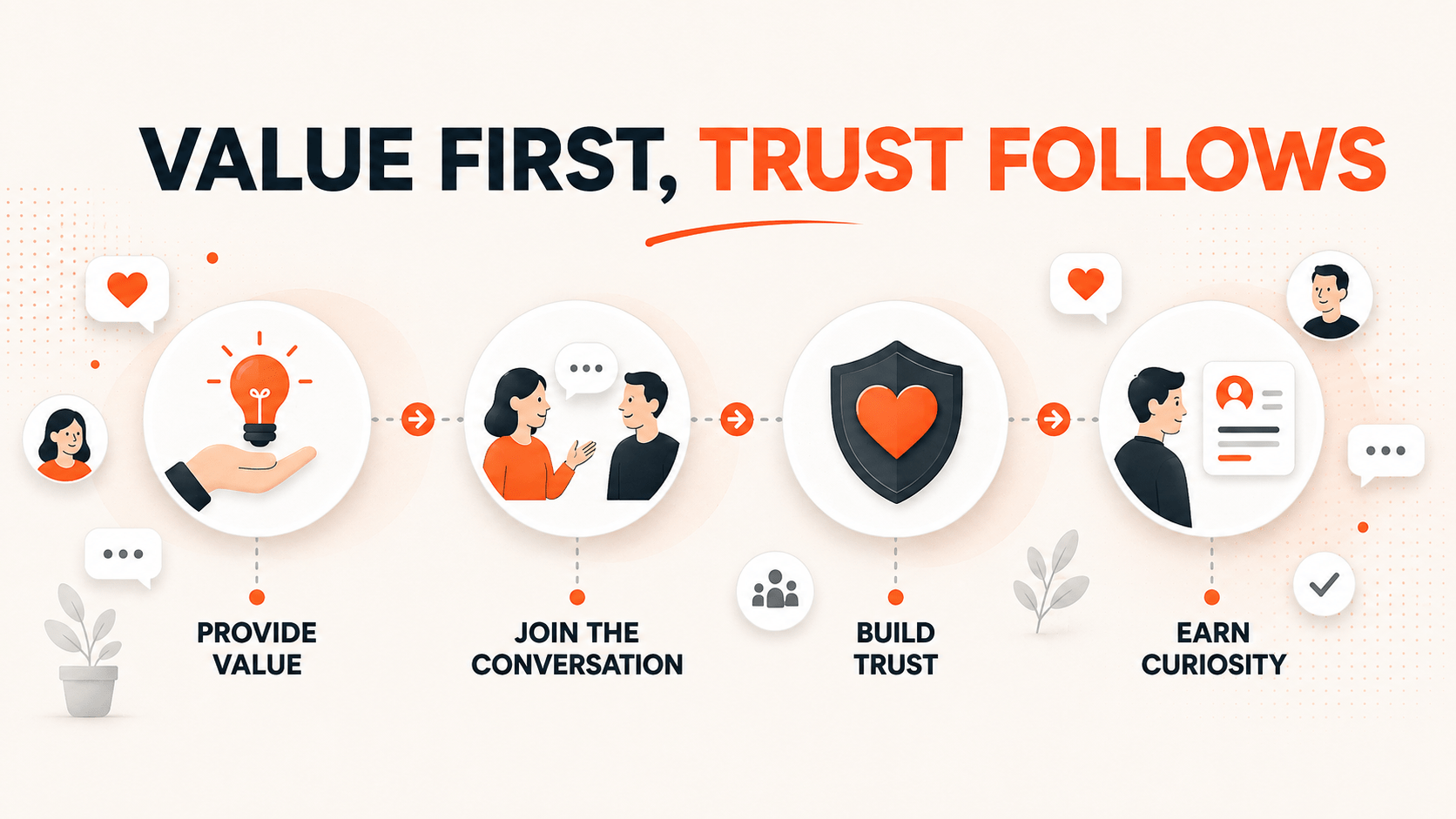
The Value-First Framework
Engaging without being salesy requires a clear framework:
Step 1: Identify Genuine Value You Can Provide
Before entering any community, answer: What can I contribute that would be genuinely valuable even if I never mentioned my product?
This might be:
- Expert knowledge about your industry
- Experience solving problems your customers face
- Insight into how decisions in your category should be made
- Perspective on trends, changes, or developments
This value must exist independent of your product. If removing all product mentions would make your contribution worthless, it’s not genuine value—it’s promotion in disguise.
Step 2: Contribute That Value Without Expectation
Enter communities and provide your genuine value without expecting anything in return. Answer questions thoroughly. Share insight freely. Help people even when your product isn’t relevant to their situation.
This feels counterintuitive. You’re giving away expertise for free. You’re helping people who might buy from competitors. You’re investing time with no guaranteed return.
But this counterintuitive generosity is what builds the trust that eventually generates returns.
Step 3: Mention Products Only Where Genuinely Relevant
Occasionally, your product genuinely is the best answer to someone’s question. In those cases—and only those cases—you can mention it.
Before mentioning your product, ask:
- Would I recommend this even if I didn’t work here?
- Is this genuinely the best solution for this specific person’s situation?
- Have I contributed enough non-promotional value to have credibility?
If all three answers are yes, a product mention is appropriate. Frame it honestly, acknowledge alternatives, and make the recommendation about the person’s needs rather than your sales goals.
Step 4: Let Curiosity Work For You
When you consistently provide genuine value, people become curious about who you are. They check your profile. They notice your business connection. Some explore further.
This pull-based discovery is fundamentally different from promotional pushing. People arrived at your business because your helpfulness earned their interest—not because you demanded their attention.
Practical Engagement Techniques
Here’s how to apply the framework in real community interactions:
Answering Questions
Salesy approach: “Great question! Our product solves exactly this. [Pitch]”
Non-salesy approach: “The key factors to consider are X, Y, and Z. For your specific situation with [details they mentioned], I’d prioritize Y because [reasoning]. Some options to look at include [multiple options including competitors if relevant]. [If your product is genuinely relevant:] Full disclosure, I work at [company], so I’m biased, but our product handles this well because [genuine explanation].”
The non-salesy approach provides real value, acknowledges bias, and mentions the product only as one option among several.
Sharing Expertise
Salesy approach: “Here are 5 tips for [topic]. Tip 5: Use our product!”
Non-salesy approach: “Having worked in [industry] for [time], here’s what I’ve learned about [topic]: [Genuine insight that helps regardless of what product they use]. Happy to answer follow-up questions.”
The non-salesy approach shares real expertise without steering toward a product recommendation.
Responding to Criticism
Salesy approach: “Actually, our product is highly rated and customers love it. Here’s why you’re wrong.”
Non-salesy approach: “Thanks for the honest feedback. You’re right that [acknowledgment of valid point]. We made that tradeoff because [genuine explanation]. For people who prioritize [what they want], [competitor/alternative] might actually be a better fit. We’re working on improving [issue].”
The non-salesy approach acknowledges criticism, explains honestly, and recommends alternatives when appropriate.
Joining Discussions
Salesy approach: Wait for promotional opportunities, then jump in with product mentions.
Non-salesy approach: Participate in discussions that interest you, add value through perspective and experience, never force product mentions into conversations where they don’t belong naturally.
The non-salesy approach builds presence through genuine participation rather than promotional hunting.
Measuring Non-Salesy Engagement
Traditional marketing metrics incentivize salesy behavior. “Product mentions” and “promotional posts” are easy to count but push toward approaches that fail.
Better metrics for community outreach marketing:
Value indicators:
- Were contributions upvoted?
- Did people thank you or express appreciation?
- Did people ask follow-up questions?
- Were you tagged or mentioned in later discussions?
Trust indicators:
- Are community members recognizing your username positively?
- Are people checking your profile after helpful contributions?
- Are your recommendations being taken seriously?
Reputation indicators:
- Is community sentiment toward your brand improving?
- Are you receiving organic mentions without participating?
- Are community members defending you when criticism arises?
These metrics matter more than promotional volume because they measure what actually generates business results: trust.
The Long-Term Perspective
Non-salesy engagement requires patience. The timeline works against traditional marketing expectations:
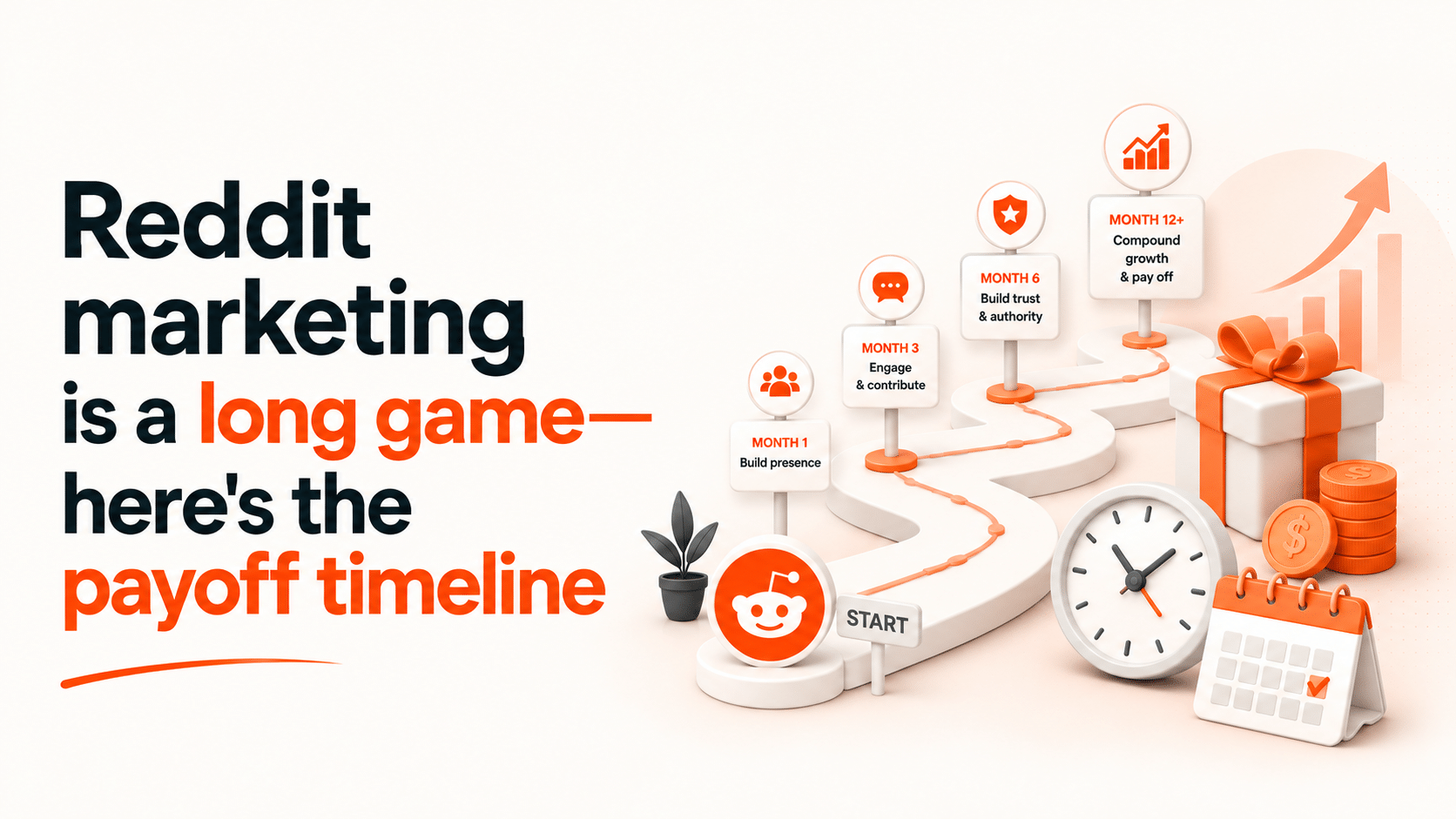
Months 1-2: You’re contributing value but seeing minimal commercial benefit. Trust is building invisibly.
Months 3-4: Community members are starting to recognize you. Some are exploring your business after helpful interactions.
Months 5-6: You’ve established credibility. Recommendations carry weight. Referral traffic is growing.
Months 7+: Organic advocacy begins. Community members recommend you in threads where you haven’t participated.
This timeline can’t be accelerated through more promotional activity. Attempting to speed it up by being more salesy actually delays it by damaging trust.
The brands that succeed accept this timeline and measure progress in trust built rather than promotions delivered.
Ready to engage communities without triggering sales resistance?
At Agence Paradis, we specialize in community outreach marketing that builds trust through genuine value. Our approach has helped partners in the sleep and health industries generate over $10 million in additional revenue—not through promotional content, but through earning recommendations by being genuinely helpful.
We’ll help you develop engagement strategies that create commercial results through contribution, not promotion.
Get your free community engagement audit at agenceparadis.com

Leave A Comment