
You can’t afford advertising. You can’t hire an agency. But you can invest time you’re probably already spending on the internet—and that’s exactly what community-based marketing requires.
Startups with zero marketing budget actually have an advantage in community marketing: authenticity. Nobody expects a founder responding in forums to be polished. Your scrappiness is an asset, not a liability.
Here’s how to build meaningful community presence when money isn’t an option.
Why Zero Budget Works Here
Community-based marketing favors startups:
Authenticity Is Your Edge
Big brands pay agencies to sound authentic. You don’t have to try—you actually are a person building something you care about. This genuine passion reads clearly in your contributions.
Founder Expertise Matters
Nobody knows your product and problem space like you do. When you answer questions, you bring depth that hired help can’t match. This expertise creates credibility.
Time Investment Beats Cash
You can’t buy trust in communities anyway—it has to be earned through consistent presence. Whether you’re paying an agency or doing it yourself, the time investment is similar. Doing it yourself just removes the financial cost.
Small Scale Is Acceptable
Communities don’t expect startup founders to be everywhere. A narrow focus on a few relevant communities is perfectly appropriate for your stage. Scale comes later.
The Zero-Budget Playbook
Step 1: Identify Where Your Customers Discuss
Find communities where your potential customers already talk about their problems:
- On Reddit:
- Search for your problem space (not your solution)
- Look for subreddits discussing the pain points you address
- Check competitor names and related products
- Find adjacent interest communities
- Other forums:
- Industry-specific communities (Indie Hackers, Hacker News, niche forums)
- Facebook groups in your category
- Discord servers for your audience
- Slack communities in your space
Prioritize:
- Communities where your expertise adds value
- Active discussions (not dead forums)
- Welcoming to newcomers
- Problems your product actually solves
Step 2: Become a Regular
Before any marketing activity, become a genuine community member:
Daily habit (15-30 minutes):
- Read new posts in your target communities
- Answer questions you can genuinely help with
- Engage with interesting discussions
- Build karma/reputation through helpfulness
What to contribute:
- Your actual expertise in the problem space
- Experiences from building your product (without pitching it)
- Helpful resources you’ve found
- Thoughtful perspectives on industry discussions
What to avoid:
- Mentioning your product (not yet)
- Self-promotional links
- Generic or low-value comments
- Anything that looks like marketing
Step 3: Build Real Relationships
Community marketing works through relationships:
Notice regulars:
- Who are the frequent, respected contributors?
- Whose opinions carry weight?
- Who asks good questions?
Engage consistently:
- Respond to the same people over time
- Remember previous conversations
- Offer help proactively to people you recognize
Be memorable:
- Have a consistent username across platforms
- Let your personality show
- Share your founder journey (the struggles, not just wins)
Step 4: Introduce Your Product (Eventually)
After weeks or months of genuine participation:
When it’s relevant:
- Someone asks about a problem you solve
- A comparison discussion includes your category
- Direct question about solutions in your space
How to mention it:
- Acknowledge your bias: “I’m building something in this space, so take this with a grain of salt…”
- Provide value beyond the pitch: Answer their question even if your product isn’t the right fit
- Be honest about limitations: “We’re early stage, so we don’t have [feature] yet”
- Don’t push: Mention it once, then let them come to you
Step 5: Let Community Momentum Build
Consistent presence compounds:
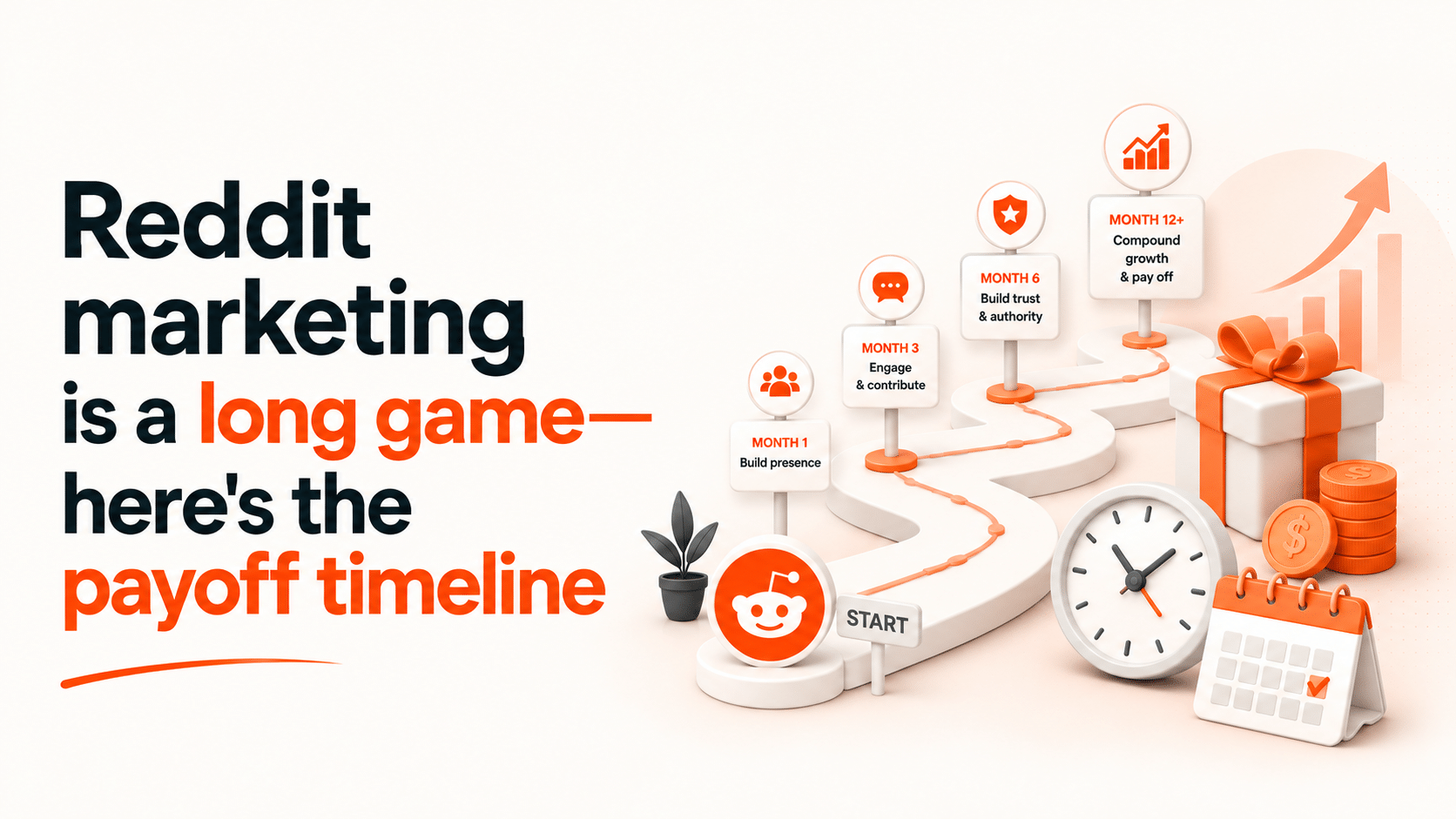
- Week 4-8: People start recognizing your username
- Month 3-4: You’re considered a community regular
- Month 5-6: People seek your opinion specifically
- Month 7+: Community members recommend you to others
This progression can’t be accelerated, but it does happen with consistent effort.
Time Investment Reality
Here’s what zero-budget community marketing actually requires:
Daily commitment: 30-60 minutes
- 15-20 minutes reading and monitoring
- 15-30 minutes engaging and responding
- Occasional longer deep-dive conversations
Weekly total: 4-7 hours
This is non-negotiable. Sporadic engagement fails. The consistency is what builds trust.
The opportunity cost question: What else would you do with those hours? If the answer is “scroll Twitter” or “check email repeatedly,” community engagement is a better use of that time.
What You Can Accomplish
Realistic expectations for zero-budget execution:
Months 1-3:
- Established presence in 2-3 communities
- Recognition from regular contributors
- Positive karma/reputation score
- Understanding of what resonates
Months 4-6:
- First traffic from community referrals
- Occasional leads or signups
- Growing organic mentions
- Relationships with potential advocates
Months 7-12:
- Consistent traffic contribution
- Regular lead generation
- Community advocacy emerging
- Foundation for scaling when budget allows
You won’t replace paid marketing results—but you’ll build something advertising can’t buy: genuine community trust.
Common Zero-Budget Mistakes
Avoid these self-sabotaging patterns:
Pitching Too Early
- The temptation to mention your product before establishing credibility wastes the authentic advantage you have.
- Instead: Wait longer than you think necessary. Your product mention will land better after genuine relationship-building.
Spreading Too Thin
- Trying to be active in ten communities means being ineffective in all of them.
- Instead: Focus on 2-3 communities maximum. Depth beats breadth.
Inconsistent Presence
- Showing up intensively then disappearing signals “this person is doing a marketing campaign.”
- Instead: Consistent daily presence, even if brief.
Treating It Like Marketing
- Approaching community engagement with marketing mindset—metrics, optimization, conversion focus—undermines authenticity.
- Instead: Treat it like building relationships with people who might become customers, partners, or advocates.
Giving Up Too Early
- Zero-budget community marketing takes months to show results. Quitting at month two means total loss.
- Instead: Commit to six months minimum before evaluating.
Scaling Later
When you do have budget:
Don’t abandon what’s working: Community presence you built personally has credibility that can’t be transferred.
Add capacity, don’t replace: Hire help for other channels while maintaining your community presence.
Build on relationships: The people you’ve connected with become assets for scaling—beta testers, advocates, referral sources.
Systematize what you learned: Document what worked so others can replicate your approach in new communities.
Building community presence on a startup budget?
At Agence Paradis, we help startups understand what’s possible at every budget level—including zero. Our approach starts with the same foundations whether you’re doing it yourself or working with us.
Our partners have generated over $10 million in additional revenue through community-based marketing. We’ll help you figure out what’s realistic for your situation and resources.
Get your free startup community strategy at agenceparadis.com

Leave A Comment