
Your potential customers don’t want to be marketed to—they want to be helped.
This is the fundamental insight that separates community engagement marketing from traditional advertising. While most brands keep interrupting people with promotional messages, smart companies are building trust by showing up in communities and genuinely helping people solve problems.
The results speak for themselves: community members convert at nearly three times the rate of non-community visitors. But this only works when trust comes first—before any mention of products, before any links to websites, before any hint of commercial intent.
Why Trust-First Works
Traditional marketing operates on interruption. You pay to place your message in front of people, hoping to catch their attention long enough to deliver your pitch. The relationship starts with the brand wanting something (attention, clicks, sales) and the customer reluctantly tolerating the intrusion.
Community engagement marketing inverts this entirely. The relationship starts with the brand giving something—helpful information, genuine advice, thoughtful responses to questions. Trust gets established before any commercial intent enters the picture.
This matters because buyers have changed how they make decisions. They don’t trust advertisements. They don’t believe marketing claims. What they trust are recommendations from people they perceive as knowledgeable and unbiased.
When someone who’s been genuinely helpful in a community eventually mentions that they use or recommend a specific product, that recommendation carries weight. It doesn’t feel like marketing because it isn’t marketing in the traditional sense—it’s a trusted community member sharing what works for them.
What Community Engagement Actually Requires
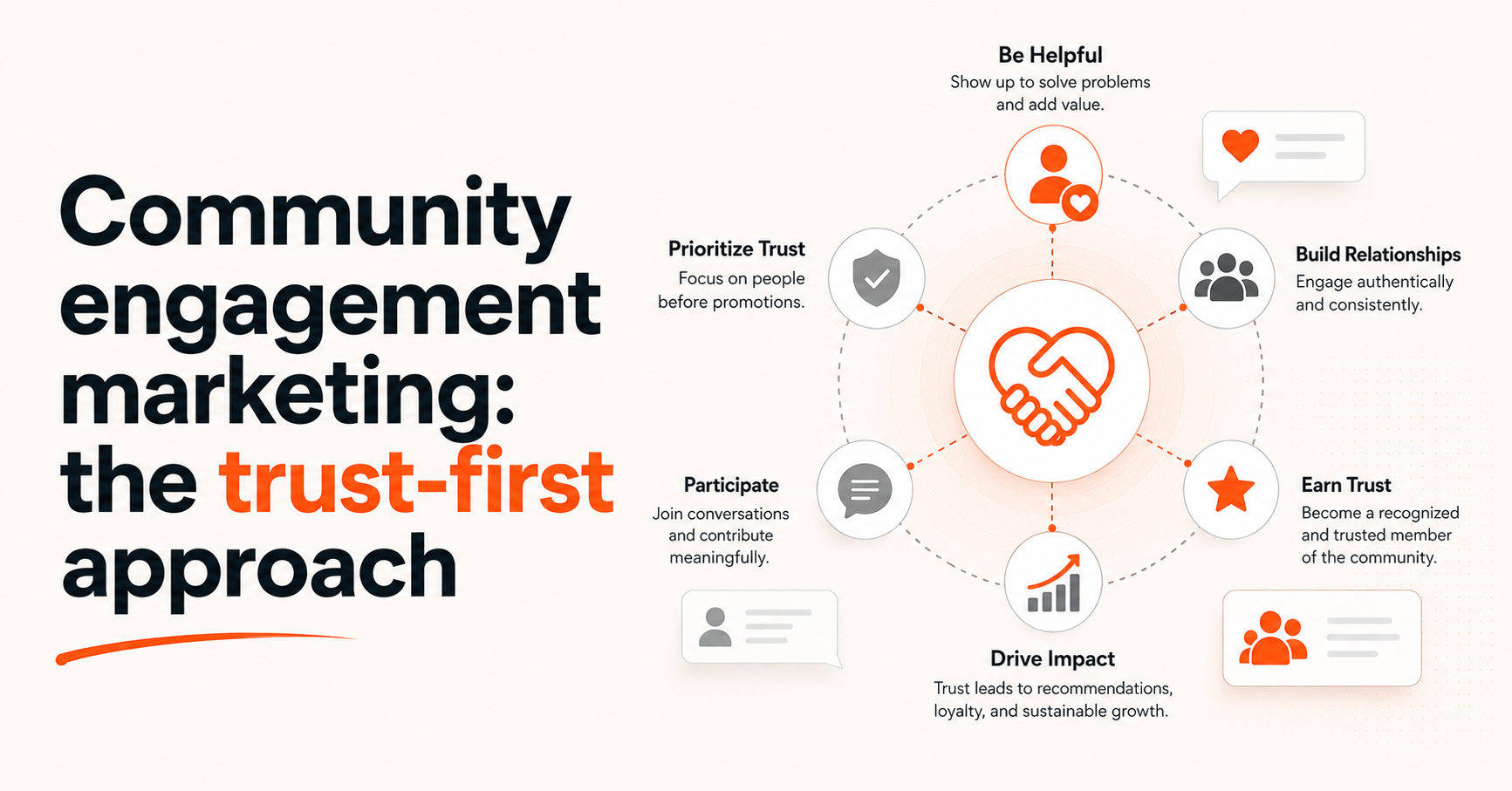
Community engagement marketing isn’t a campaign. It’s a sustained commitment to showing up in spaces where your potential customers gather and contributing value without immediate expectation of return.
On Reddit, this means participating in relevant subreddits by answering questions, sharing experiences, and adding to discussions. On Discord, it means being present in servers where your audience hangs out. In forums, it means becoming a recognized contributor who provides useful insights.
The key word is “participating.” Not lurking until promotional opportunities appear. Not jumping in only when someone asks about your product category. Actual, ongoing participation that establishes you as a genuine community member.
This requires investment—primarily time, but also a different kind of expertise. The person engaging on your behalf needs to actually understand your industry deeply enough to provide genuinely helpful answers. They need to communicate authentically, not in marketing speak. They need to be patient enough to build reputation over months before seeing direct business results.
Most brands underestimate what this takes. They assign it to an intern or include it as a side task for someone already stretched thin. They expect results in weeks rather than months. They measure success by promotional posts rather than trust built.
This is why most community engagement marketing fails: brands want the results without making the investment the results require.
Building Trust Over Time
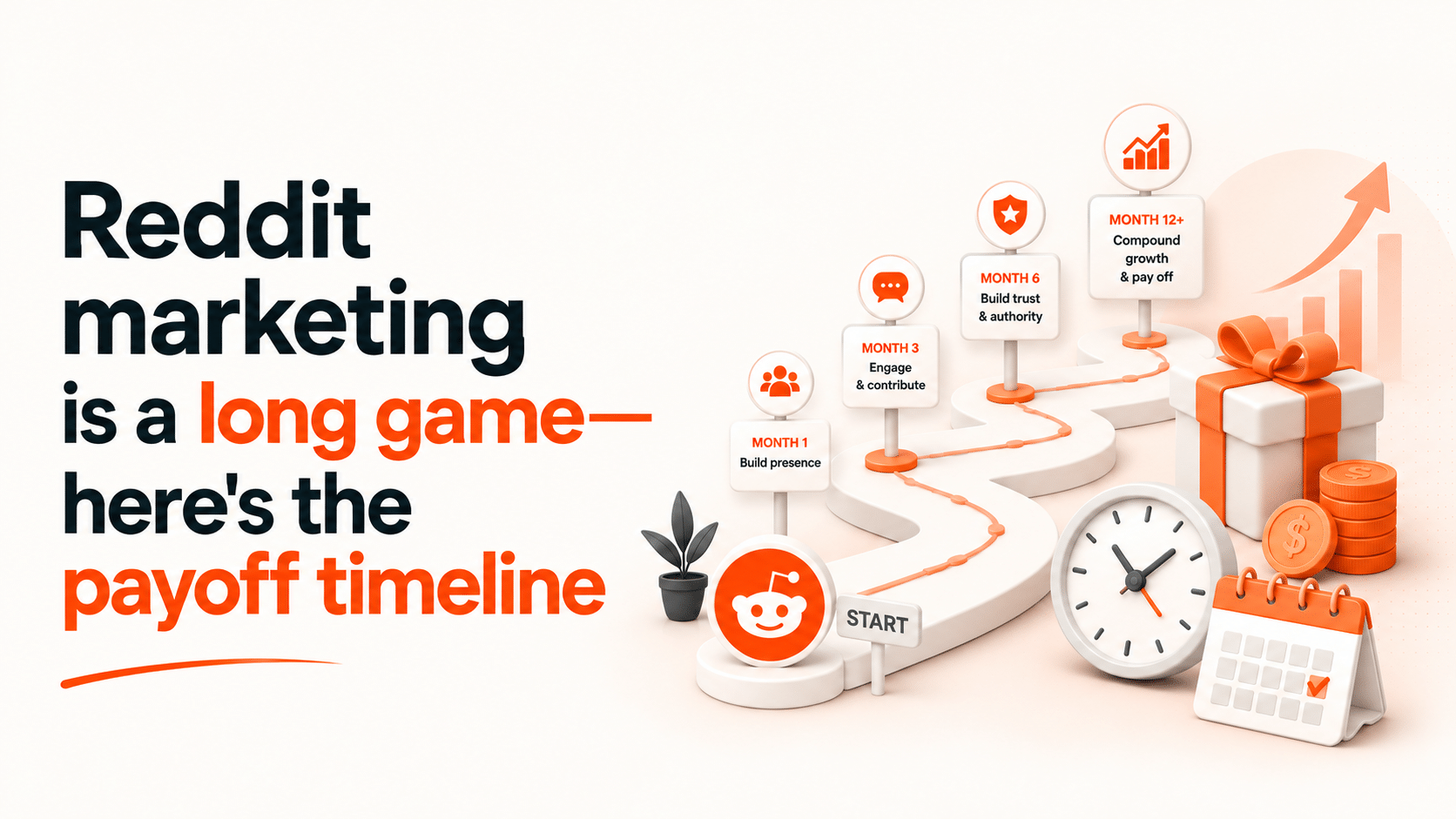
Trust accumulates slowly and compounds over time. Here’s what the progression typically looks like:
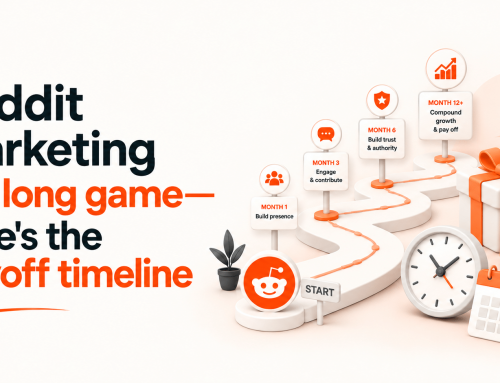
Months 1-2: Foundation building. You’re a new presence in the community. Nobody knows who you are. Your contributions are evaluated skeptically. Focus entirely on being helpful without any promotional element.
Months 3-4: Recognition emerging. Regular contributors start recognizing your username. Your karma builds if you’re on Reddit. You understand community norms and inside jokes. You know which topics generate good discussions and which ones to avoid.
Months 5-6: Trust establishing. Your recommendations carry weight because you’ve demonstrated expertise and good judgment. When you suggest solutions, people actually consider them rather than dismissing them as spam. You might receive direct messages asking for advice.
Months 7+: Authority position. You’re a recognized expert in the community. New members see your highly-upvoted historical answers and form positive impressions before they ever interact with you directly. Your contributions get referenced by other community members. When commercial opportunities arise, your participation feels natural rather than promotional.
This timeline can’t be rushed. Attempts to accelerate it usually backfire—communities sense when someone is being helpful only as a means to an end, and the backlash can be severe.
The Problems Community Engagement Solves
Traditional marketing has fundamental problems that community engagement addresses:
Rising costs. Paid advertising gets more expensive every year. The bidding wars for attention never end. Community presence is built through time investment rather than ad spend, creating a sustainable acquisition channel.
Declining trust. Consumers trust advertising less than ever. They trust peer recommendations more. Community engagement positions your brand as a peer contributor rather than an advertiser.
Platform dependency. Social media algorithms change constantly, reducing organic reach and increasing costs. Community trust exists independent of any platform’s algorithm decisions.
Shallow relationships. Advertising creates awareness but rarely loyalty. Community engagement creates relationships with depth—customers who trust your brand because of genuine interactions, not just exposure to messaging.
Competitive vulnerability. Any competitor can match your ad spend. Few can replicate years of accumulated community trust and reputation.
Measuring Community Engagement
Traditional marketing metrics don’t capture community engagement’s value. Impressions and clicks don’t measure trust. But that doesn’t mean the impact can’t be measured.
Qualitative indicators:
- Recognition from regular community members
- Unsolicited recommendations from other users
- Direct messages requesting advice
- Mentions of your brand in threads where you didn’t participate
- Invitations to participate in community events or AMAs
Quantitative indicators:
- Karma accumulation (on Reddit)
- Comment engagement rates
- Referral traffic from community platforms
- Branded search increases following community activity
- Sentiment analysis of brand mentions
- Customer acquisition costs compared to other channels
The most important metric is one that’s hard to track precisely: how often your brand gets recommended by people you’ve never directly interacted with. This is the compound effect of community trust—influence that extends beyond your direct participation.
Common Mistakes to Avoid
Treating engagement as a sales channel. The moment your participation feels like a lead generation tactic, trust evaporates. Engagement must be genuinely valuable in its own right, not a delivery mechanism for promotional messages.
Inconsistent presence. Community trust requires consistent showing up. Disappearing for weeks and then suddenly reappearing when you want to promote something is transparent and damaging.
Overpolishing your voice. Corporate language instantly signals that you’re marketing, not participating. Real community members don’t write like press releases. They’re casual, occasionally imperfect, and clearly human.
Engaging only in promotional contexts. If you only show up when someone asks for product recommendations, you’re not a community member—you’re a salesperson waiting for opportunities. True engagement includes participation in conversations that have nothing to do with potential sales.
Responding defensively to criticism. Communities test brands by criticizing them. How you respond matters enormously. Defensive responses confirm suspicions. Humble, constructive responses build trust.
The Competitive Advantage
Here’s what makes community engagement marketing such a powerful competitive advantage: it’s hard to fake and impossible to buy.
A competitor can match your ad spend overnight. They can copy your messaging, target the same audiences, and compete for the same keywords.
But they can’t buy three years of community trust. They can’t purchase historical threads where you’ve been genuinely helpful. They can’t shortcut the reputation you’ve built through hundreds of authentic interactions.
Community engagement creates a moat around your business. The longer you invest in it, the wider that moat becomes. Every helpful answer you provide, every genuine interaction you have, every bit of trust you build—these compound into competitive advantages that strengthen over time.
This is why smart brands are investing in community engagement now, even though the results aren’t immediate. They understand they’re building an asset that becomes more valuable the longer they maintain it.
Ready to build trust where your customers actually gather?
At Agence Paradis, community engagement marketing is our entire focus. We’ve spent over three years developing the strategies, processes, and patience required to build genuine trust in online communities.
Our partners in the sleep and health industries have generated over $10 million in additional revenue through the trust we’ve helped them build—not through ads, but through authentic participation that earns genuine recommendations.
Book a discovery call with us right now at agenceparadis.com

Leave A Comment