
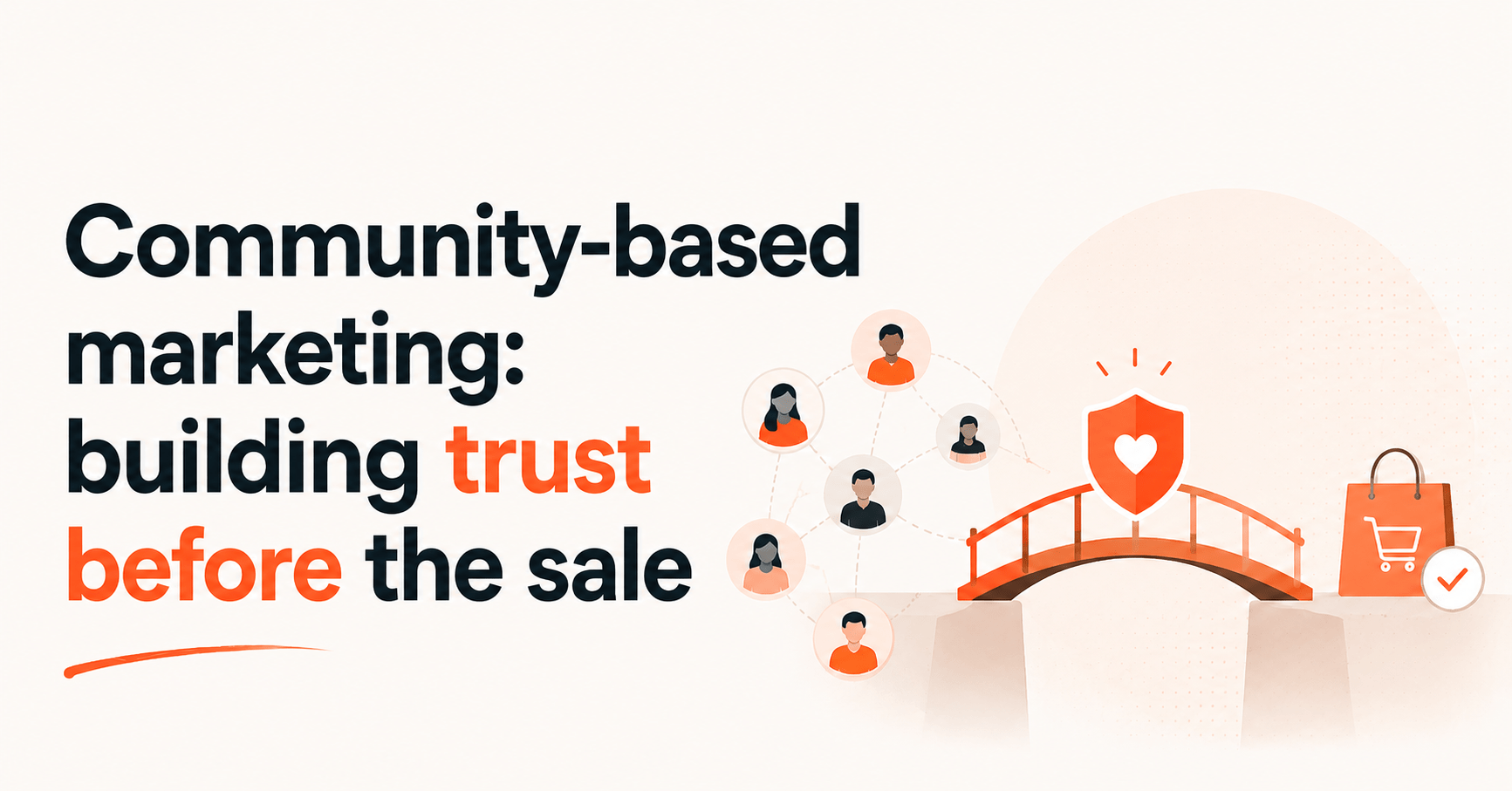
The most profitable customer relationship starts long before the first purchase—it starts when you help someone without asking for anything in return.
This is the core principle of community-based marketing. Instead of interrupting strangers with advertisements, you become a trusted presence in the communities where your potential customers already gather. You build trust first, and sales follow naturally.
It sounds slower than running ads. It is slower. But it creates something advertising never can: customers who trust you before they ever visit your website.
The Trust Crisis in Modern Marketing
Consumers have developed sophisticated defenses against marketing:
They skip ads. They install blockers. They scroll past sponsored content. They discount influencer recommendations. They know that reviews can be bought, testimonials can be fabricated, and claims can be exaggerated.
The marketing tactics that worked a decade ago are increasingly ineffective. The more brands have abused consumer attention, the more consumers have learned to protect themselves.
But trust hasn’t disappeared—it’s moved. Consumers still trust recommendations. They just trust recommendations from peers rather than brands. They trust communities they’ve chosen to join rather than messages that interrupt them.
Community-based marketing works with this shift rather than against it. Instead of fighting to capture attention, you earn trust by being genuinely helpful in spaces consumers already inhabit.
What Community-Based Marketing Actually Means
This isn’t about creating your own community and hoping customers join. It’s about participating authentically in communities that already exist.
On Reddit, this means becoming a valued contributor in subreddits where your target audience asks questions and shares experiences. On Discord, it means being genuinely helpful in servers where your potential customers hang out. In forums, it means earning reputation through consistent, valuable contributions.
The key word is “participating.” You’re not broadcasting. You’re not promoting. You’re participating as a member who happens to have relevant expertise.
This requires a fundamental mindset shift from how most marketing works:
Traditional marketing says: “How do we get our message in front of these people?”
Community-based marketing says: “How do we genuinely help these people?”
Traditional marketing measures: Impressions, reach, clicks
Community-based marketing measures: Trust built, relationships formed, advocates created
Traditional marketing stops when: The campaign ends
Community-based marketing compounds when: Consistent participation continues
The Trust-First Approach in Practice
Building trust before the sale follows a specific progression:
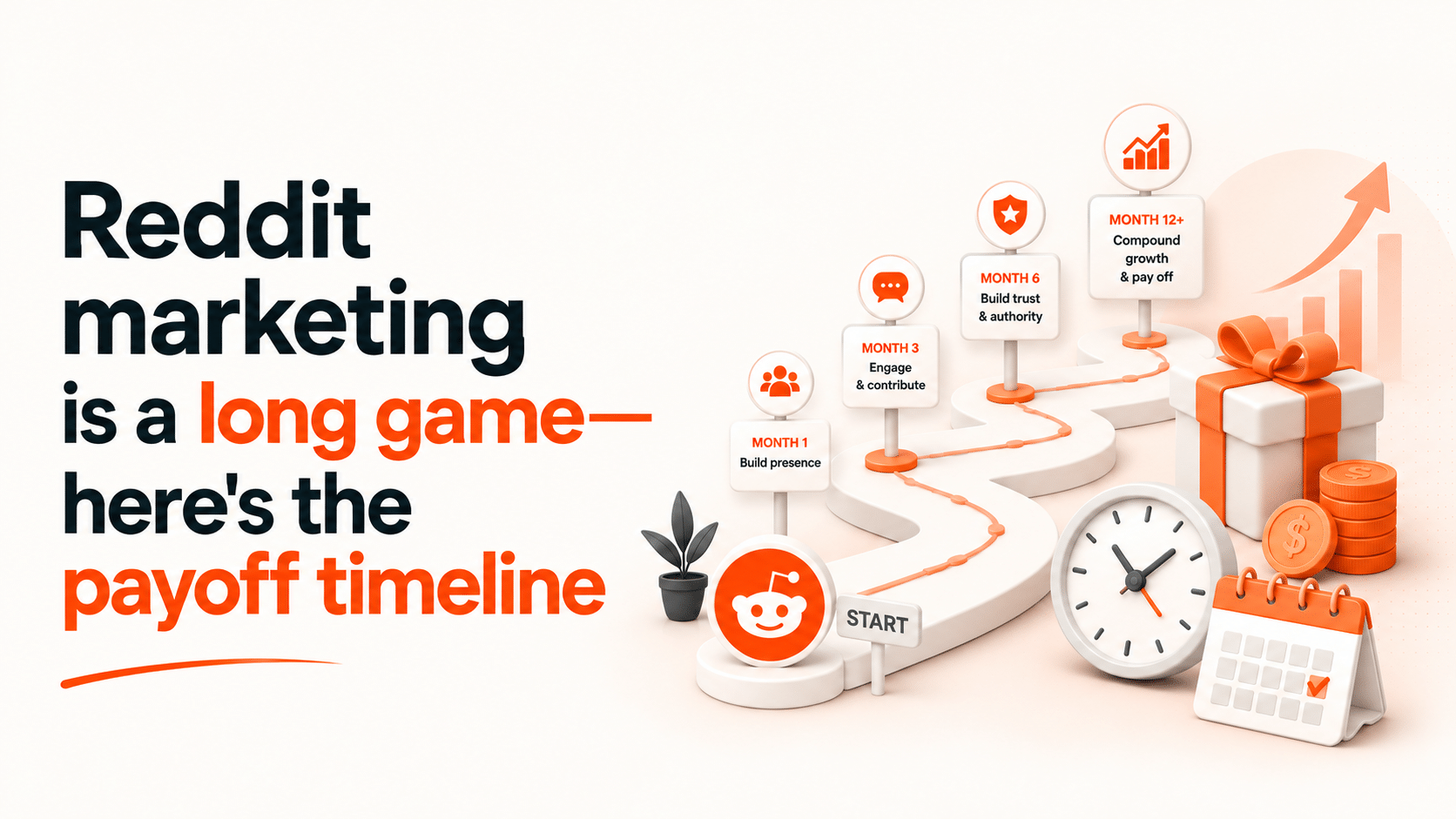
Phase 1: Listening (Weeks 1-2)
Before contributing anything, spend time understanding the community. What questions get asked repeatedly? What problems frustrate members? What tone works? What triggers negative reactions? What do members value?
This isn’t just research—it’s respect. Understanding community culture before participating shows that you care about the community, not just about using it for marketing.
Phase 2: Contributing (Weeks 3-12)
Begin participating with zero promotional intent. Answer questions. Share expertise. Add value to discussions. Build karma and reputation.
During this phase, your contributions should be genuinely helpful regardless of any business benefit. If someone asks a question where your competitor is actually the best answer, say so. This counterintuitive honesty is what builds trust.
Phase 3: Subtle Recognition (Months 3-6)
As you become recognized as a helpful community member, you can occasionally mention your product where genuinely relevant. Not in every post—maybe 5-10% of contributions. And always in context where the recommendation makes sense.
The key is that by now, you’ve earned the credibility for your recommendations to carry weight. You’re not a stranger promoting something; you’re a known community member sharing what you genuinely believe.
Phase 4: Advocacy (Months 6+)
The ultimate goal: other community members start recommending you without being prompted. They’ve seen your helpful contributions. They trust your expertise. When relevant threads appear, they think of your brand.
This unprompted advocacy is more valuable than anything you could post yourself. It’s genuine recommendation from community members with no apparent commercial motivation.
Why Trust-First Converts Better
Customers acquired through community trust behave differently than customers acquired through advertising:
Higher conversion rates. By the time someone clicks through from a community recommendation, they already trust your brand. The “sales” work has largely been done. They’re arriving ready to buy, not ready to be convinced.
Higher lifetime value. Trust-based customers tend to be more loyal. They chose you based on genuine recommendation, not just because your ad showed up. This leads to repeat purchases and lower churn.
Lower acquisition costs. Community presence requires time investment, but it doesn’t require continuously increasing ad spend. Once trust is established, maintaining it costs less than constantly acquiring new attention.
Built-in advocacy. Customers who found you through community trust often become advocates themselves. They recommend you in the same communities where they discovered you, creating a virtuous cycle.
The Problems This Solves
Community-based marketing addresses fundamental challenges that plague traditional marketing:
Platform dependency. When you build presence across communities, you’re not dependent on any single platform’s algorithm. Facebook can change its rules; your Reddit reputation remains.
Rising costs. Advertising costs trend upward indefinitely. Community trust, once built, is maintained at relatively stable cost.
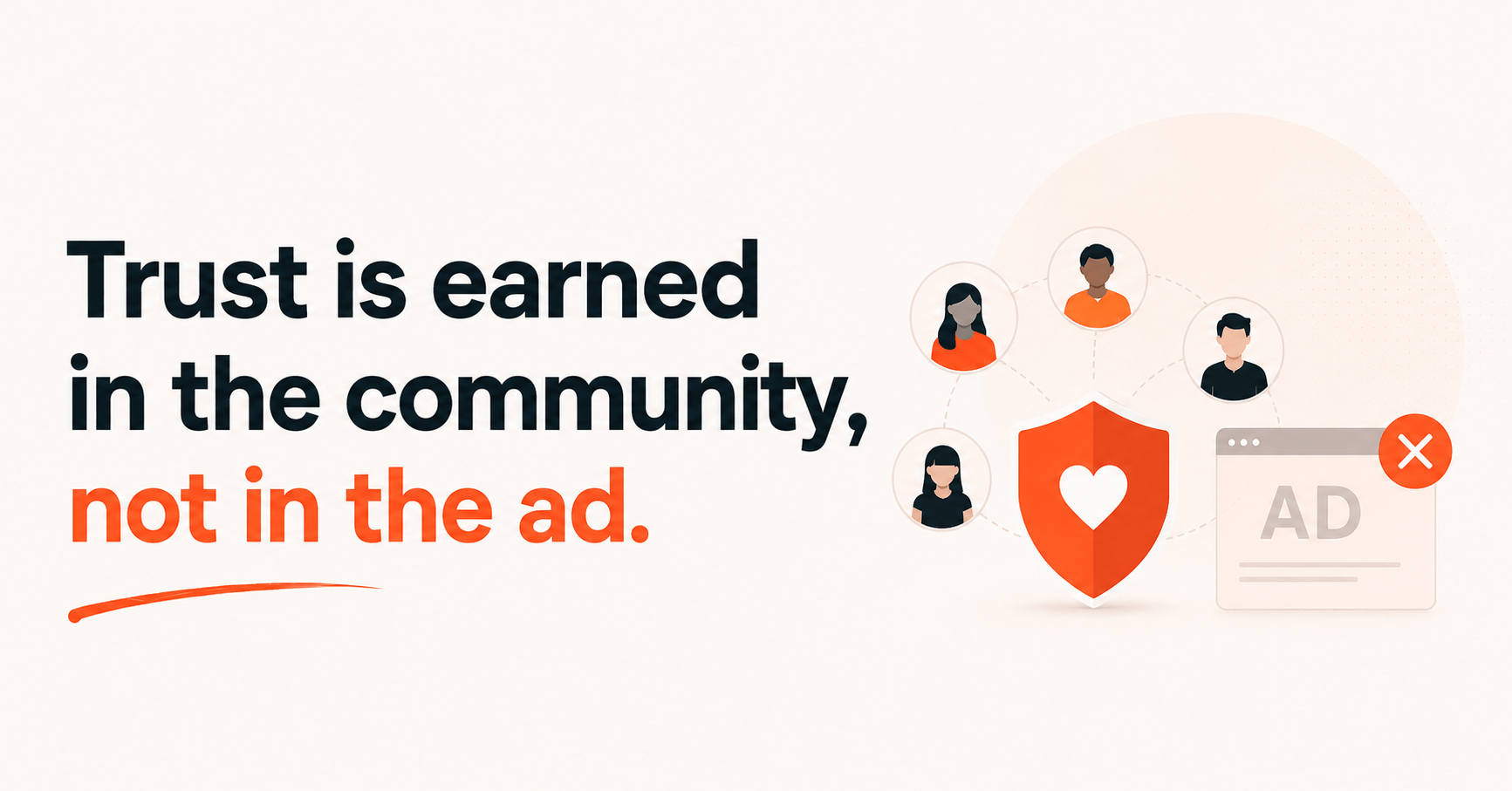
Trust deficit. The more advertising people see, the less they trust it. Community recommendations work in the opposite direction—they leverage existing trust rather than fighting mistrust.
Competitive copying. Competitors can match your ad spend. They can copy your messaging. They cannot replicate years of accumulated community trust and reputation.
Shallow relationships. Advertising creates awareness but rarely loyalty. Community engagement creates relationships with depth—customers who trust you because of genuine interaction.
Common Mistakes to Avoid
Treating community presence as a campaign.
Campaigns have start dates and end dates. Community presence is ongoing. Brands that approach communities with campaign mentality—intense activity followed by disappearance—destroy the trust they were trying to build.
Measuring only direct conversions.
Community trust affects buying decisions in ways that are hard to attribute directly. Someone might see your helpful Reddit comment, Google your brand later, and convert through a direct visit. Traditional attribution misses this entirely.
Optimizing for volume over quality.
More posts doesn’t mean better results. A single genuinely helpful response builds more trust than ten shallow comments. Resist the urge to scale through volume.
Abandoning the approach when results aren’t immediate.
Trust takes time to build. Brands expecting quick wins from community participation will be disappointed. The payoff comes from compound effects over months and years.
Delegating to people who don’t understand the community.
The person engaging on behalf of your brand needs to actually understand both your product and the community culture. Outsourcing to someone who doesn’t genuinely understand either produces obviously inauthentic participation.
Building This Into Your Strategy
Community-based marketing works best when it’s integrated into overall strategy, not treated as an isolated tactic:
Align with product development. Community conversations reveal what customers actually want. Feed this intelligence back to product teams.
Connect to customer service. Problems surfaced in communities should trigger real solutions, not just reputation management.
Inform content strategy. Questions asked repeatedly in communities are content ideas waiting to be developed.
Support sales enablement. Sales teams should know which community conversations to reference when prospects are comparing options.
The brands that succeed with community-based marketing treat it as a core business function, not a marketing add-on.
Ready to build trust that converts into customers?
At Agence Paradis, community-based marketing is our entire focus. We’ve spent over three years building authentic presence in communities where buying decisions happen.
Our partners in the sleep and health industries have generated over $10 million in additional revenue by building trust first—showing up in communities as genuinely helpful presences, not promotional accounts.
We’ll map the communities where your customers gather, develop a trust-building strategy, and execute with the consistency that community presence requires.
Get your free community audit at agenceparadis.com

Leave A Comment