
Talking about community-based marketing in theory is easy. Seeing how it actually plays out—the timeline, the tactics, the results—is what helps you understand if it can work for your business.
This breakdown examines how community-based marketing works in practice: what successful execution looks like, how long results take to materialize, and what separates wins from failures.
No company names here (confidentiality matters), but real patterns from real campaigns.
Case Study Pattern 1: The Sleep Industry Newcomer
The Situation
A direct-to-consumer mattress company entering a market dominated by established players with massive advertising budgets. They couldn’t outspend competitors on ads, so they needed an alternative path to customer attention.
The Community Opportunity
Sleep-related subreddits had hundreds of thousands of members actively discussing mattress purchases. Threads asking “what mattress should I buy?” appeared daily. These communities were skeptical of advertising and actively sought peer recommendations.
The Approach
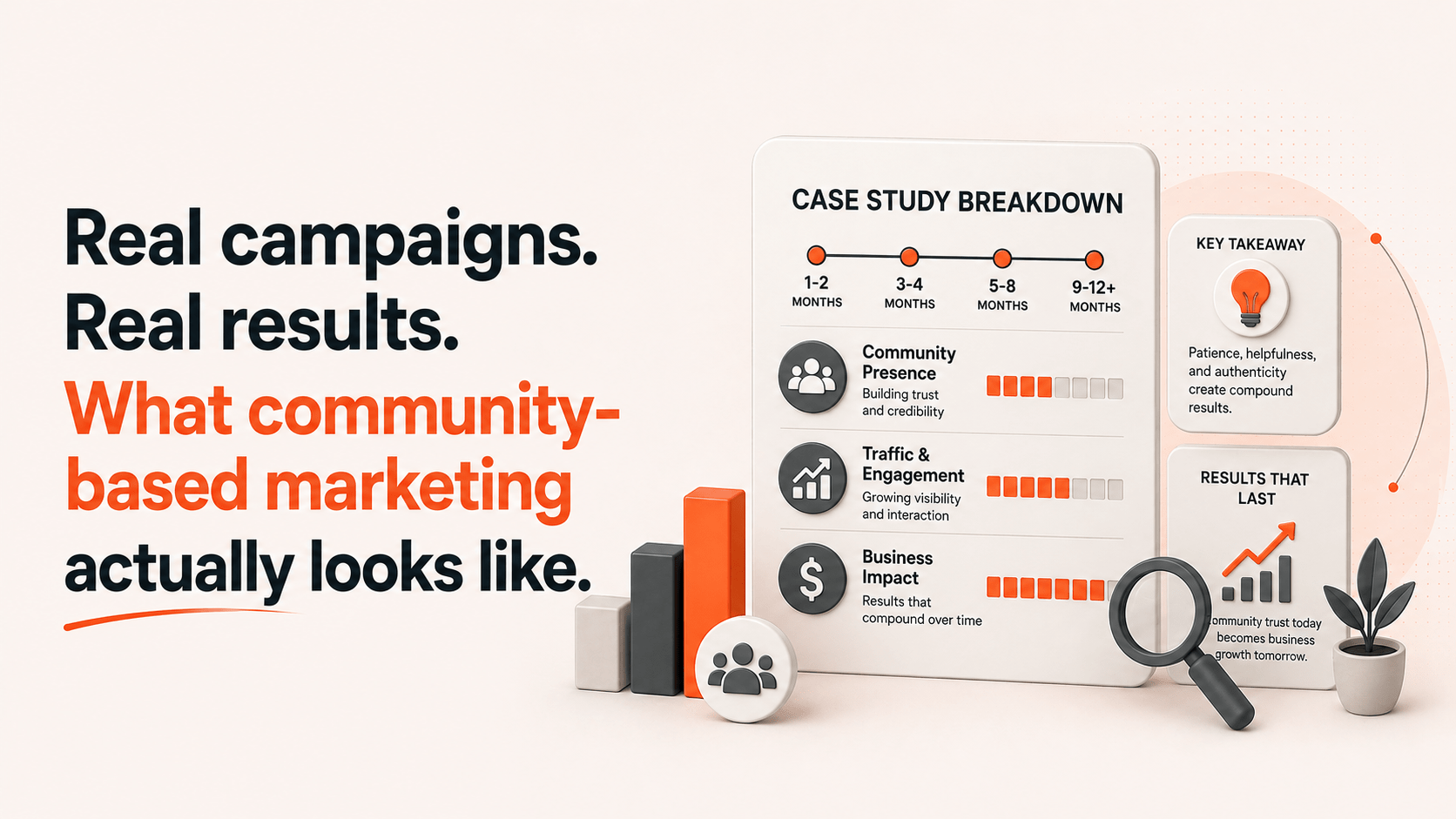
- Months 1-2: Account development and listening. Built account credibility through genuine participation in sleep discussions—answering questions about sleep hygiene, bedroom environment, sleep disorders—without any product mentions.
- Months 3-4: Expanded participation to mattress-specific discussions. Provided genuinely helpful buying guidance: what to look for, how to evaluate firmness, when to spend more versus save. Still minimal product mentions—maybe 5% of contributions.
- Months 5-6: With established credibility, began mentioning their product when genuinely relevant to someone’s specific needs. Always disclosed affiliation. Always acknowledged competitors when they were better fits.
- Months 7-12: Consistent presence with growing recognition. Community members started tagging their account when mattress questions arose. Some community members began recommending the brand unprompted.
The Results
- Reddit became the third-largest traffic source behind organic search and direct
- Customers acquired through Reddit had 40% higher lifetime value than ad-acquired customers
- Community discussions ranking on Google created ongoing organic visibility
- Brand sentiment in communities shifted from unknown to positively recognized
The Timeline Reality
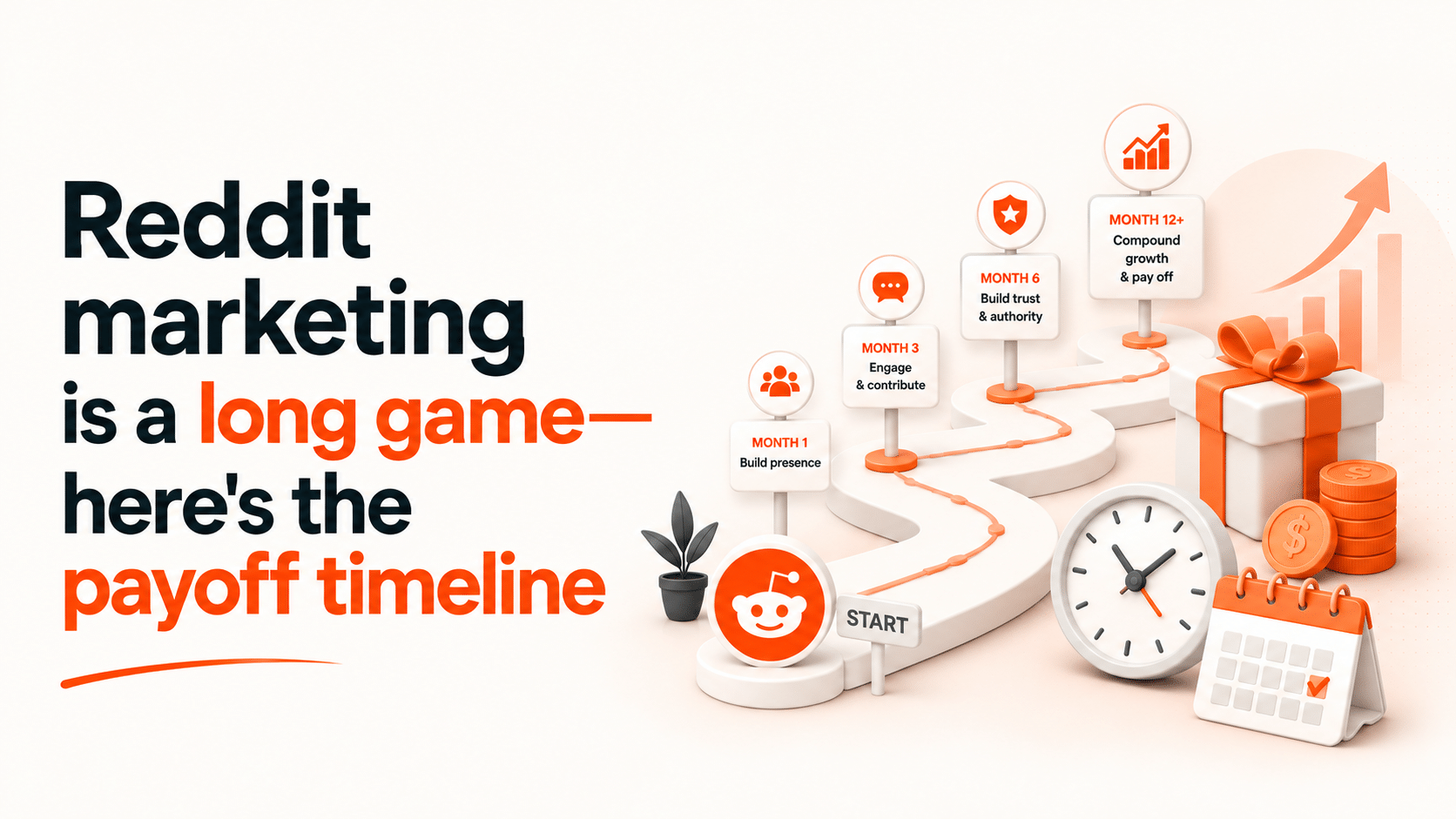
- Meaningful traffic: Month 5-6
- Significant impact: Month 9-12
- Compounding returns: Year 2+
This is slower than advertising. But the customers were better quality and the effects continued compounding.
Case Study Pattern 2: The B2B SaaS Tool
The Situation
A project management software company in a crowded market. Their product had specific strengths for certain workflows but struggled to differentiate through traditional marketing against better-funded competitors.
The Community Opportunity
Professional subreddits and forums where target users (operations managers, project leads, startup founders) actively discussed productivity tools. Regular threads comparing options and asking for recommendations.
The Approach
- Phase 1 (Months 1-2): Established presence in productivity and business communities. Contributed expertise on project management methodology, team coordination, and workflow optimization—topics adjacent to their product but valuable independent of it.
- Phase 2 (Months 3-4): Expanded to software comparison discussions. Provided balanced perspectives on various tools, including honest assessments of competitor strengths. Built reputation as knowledgeable and unbiased despite company affiliation.
- Phase 3 (Months 5-8): When prospects asked about use cases where their product excelled, provided detailed explanations with appropriate disclosure. Also recommended competitors when those were better fits for the person’s specific situation.
- Phase 4 (Month 9+): Community recognition reached the point where other members would tag them in relevant discussions or recommend the product based on their reputation for helpfulness.
The Results
- Trial signups from Reddit converted to paid at 2x the rate of ad-driven trials
- Reduced reliance on paid advertising in a market where customer acquisition costs were rising 30%+ annually
- Community discussions became ongoing lead source with no marginal cost
- Product feedback from community conversations informed development priorities
Key Insight
The willingness to recommend competitors when appropriate was critical. It seemed counterproductive but established trust that made positive recommendations highly credible.
Case Study Pattern 3: The Failed Campaign
The Situation
A supplement company wanting quick results from Reddit marketing. They had budget, product, and urgency—leadership wanted visible results within 90 days.
What Went Wrong
- Mistake 1: Skipped the foundation phase. Pressure for quick results meant starting promotional activity before building community credibility. Accounts were new with minimal karma history.
- Mistake 2: Over-indexed on product mentions. The ratio skewed too promotional—maybe 40% of activity involved product mentions. Pattern became obvious to community members.
- Mistake 3: Ignored community culture. Contributions read like marketing copy adapted for Reddit rather than genuine community participation. Tone didn’t match the casual, authentic voice communities expected.
- Mistake 4: Responded defensively to criticism. When community members questioned the promotional pattern, responses were defensive rather than acknowledging and adjusting.
The Results
- Multiple accounts banned from target subreddits
- Brand developed reputation as “spammy” in communities that mattered
- Negative threads about the brand’s marketing tactics appeared
- Spent 6 months trying to recover reputation that could have been built positively in the same time
The Lesson
Rushing community-based marketing doesn’t just fail—it actively damages your position. Better to not participate than to participate badly.
What Separates Success From Failure
Across successful and failed community campaigns, clear patterns emerge:
Success Factors
- Patience with timeline. Successful campaigns accepted that meaningful results take 6+ months. They measured progress in trust indicators, not immediate conversions.
- Helpfulness ratio. Successful campaigns maintained 90%+ helpful content with under 10% promotional. They contributed genuine value regardless of immediate commercial benefit.
- Authentic voice. Successful contributions sounded like real people, not brands. Casual language, acknowledged imperfections, conversational tone.
- Graceful handling of criticism. When criticized, successful campaigns acknowledged valid points, explained perspectives without defensiveness, and sometimes recommended alternatives.
- Consistency over intensity. Daily moderate engagement outperformed occasional intensive efforts. Presence needed to be sustained, not sporadic.
Failure Factors
- Impatience. Failed campaigns pushed for results faster than the platform rewards. Pressure for quick wins led to promotional behavior that triggered community immune response.
- Promotional ratio. Failed campaigns mentioned products too frequently. Even individually reasonable mentions created patterns that looked like marketing campaigns.
- Corporate voice. Failed contributions read like adapted press releases or social media posts. The tone mismatched community expectations.
- Defensive responses. Failed campaigns treated criticism as attacks to deflect rather than feedback to incorporate. This confirmed community suspicions about commercial motivation.
- Inconsistent presence. Failed campaigns engaged intensively then disappeared. This pattern looked like campaign-based marketing rather than genuine community membership.
Realistic Expectations
Based on community-based marketing patterns:
What you can expect in 3 months:
- Account credibility established
- Community culture understood
- Initial recognition developing
- No meaningful traffic or conversions yet
What you can expect in 6 months:
- Recognition from regular community members
- Some referral traffic appearing
- First signs of organic recommendations
- Beginning to understand what content resonates
What you can expect in 12 months:
- Established voice in target communities
- Consistent referral traffic
- Regular organic mentions by community members
- Clear patterns of what works and what doesn’t
What you can expect in 24+ months:
- Significant traffic source
- Strong reputation that buffers against occasional problems
- Advocacy network that markets for you
- Compound effects accelerating
These timelines assume consistent, quality execution. Mistakes extend them. Gaps in activity reset progress.
Want to see if community-based marketing could work for your business?
At Agence Paradis, we’ve run community-based marketing campaigns across multiple industries. We know what the successful patterns look like—and what causes failures.
Our partners in the sleep and health industries have generated over $10 million in additional revenue through approaches like those described above. We’ll assess whether similar patterns could work for your situation.
Get your free community marketing assessment at agenceparadis.com

Leave A Comment