
Most brands enter communities with something to say. The successful ones enter with a desire to understand.
This single difference—speaking versus listening—determines whether community marketing works or fails. Brands that lead with listening build trust. Brands that lead with messaging get rejected.
It sounds simple, but it requires a fundamental shift in how marketers approach new channels. Everything you’ve learned about launching campaigns, crafting messages, and pushing content works against you in communities. Success starts with shutting up and paying attention.
The Listening Deficit
Traditional marketing trains us to talk. We develop messages, create campaigns, and push content. The goal is always to communicate outward—to get our message in front of the right people.
This training creates a listening deficit. Marketers are so focused on what they want to say that they fail to understand what audiences actually need to hear.
In most channels, you can get away with this. Advertising doesn’t require understanding—it requires eyeballs. You can push messages at people without deeply knowing them.
Community marketing doesn’t offer that shortcut. Communities are built on mutual understanding and shared interest. When you enter a community without understanding it, you immediately mark yourself as an outsider. Everything you say confirms that you don’t belong.
What Listening Reveals
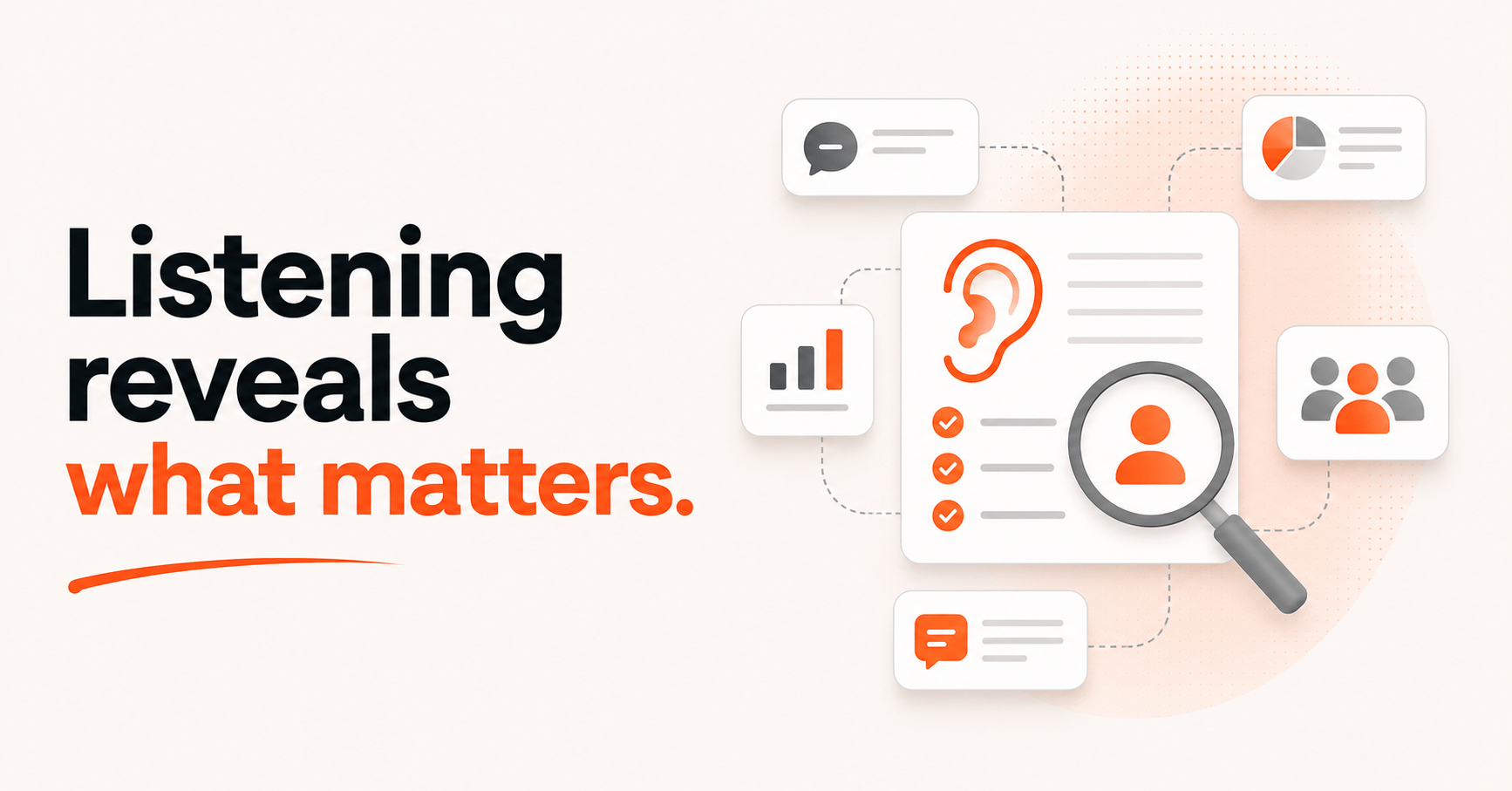
When you genuinely listen to community conversations, you discover information that transforms your approach:
The Real Questions People Ask
Marketing teams imagine what customers want to know. Communities reveal what they actually want to know. These are often different.
You might think customers want to understand your product’s features. But community conversations reveal they want to know how it compares to competitors, what the real limitations are, and whether it works for their specific situation.
The Language People Use
Communities have their own vocabulary. The terms people use to describe problems, evaluate solutions, and discuss options are often different from marketing language.
Using the wrong language marks you as an outsider. Using the right language signals that you understand the community. This difference is subtle but significant.
The Concerns You’re Not Addressing
Community discussions reveal fears, objections, and concerns that customers don’t share directly with brands. They’re more honest with each other than they are with you.
These unaddressed concerns often explain why people don’t buy. Listening reveals what’s actually stopping them.
Who the Trusted Voices Are
Every community has members whose opinions carry extra weight. They might not have official titles, but their recommendations influence others.
Identifying these trusted voices helps you understand what credibility looks like in the community. It also reveals potential relationships worth building.
What Gets Celebrated and Criticized
Communities have collective values. Some behaviors earn praise; others earn criticism. Understanding these values helps you participate in ways that build rather than damage reputation.
The Listening Phase
Before any active participation, invest in pure listening:
Time Commitment
Plan to spend 2-4 weeks observing before posting anything. This feels slow when you’re eager to start, but it prevents the mistakes that eager beginners make.
What to Track
During your listening phase, document:
- Frequently asked questions in your category
- Common complaints about existing solutions
- Language and terminology the community uses
- Community rules (both written and unwritten)
- Content types that get positive response
- Behaviors that trigger negative reactions
- Influential community members
- Patterns in what gets upvoted vs. downvoted
Where to Listen
Focus your listening on:
- New posts in relevant subreddits
- Comment threads on popular discussions
- Community sidebar rules and guidelines
- Historical threads (search your category)
- Moderator communications
- Reactions to other brand participation (what worked and what didn’t)
Creating a Listening Log
Document your observations systematically. Create a simple document that tracks:
- Community name and URL
- Key topics discussed
- Common questions and concerns
- Language/terminology notes
- Cultural norms observed
- Potential contribution opportunities
This log becomes your reference for crafting appropriate contributions later.
From Listening to Understanding
Raw listening isn’t enough. You need to synthesize observations into understanding:
Map the Conversation Flow
How do discussions typically develop in this community? What prompts generate engagement? How do people interact with each other?
Understanding conversation flow helps you participate naturally rather than disrupting the rhythm.
Identify Pain Points
What frustrations do community members express repeatedly? What problems aren’t being solved adequately? Where are people struggling?
These pain points represent opportunities for genuinely helpful contribution.
Understand the Trust Dynamics
What makes someone credible in this community? Post history? Karma score? Technical expertise? Specific experiences? Communication style?
Understanding trust dynamics helps you build credibility efficiently.
Recognize Sensitive Topics
Every community has topics that trigger strong reactions. Politics, controversial brands, historical conflicts—knowing what to avoid is as important as knowing what to engage with.
Transitioning to Participation
Listening never really ends—it continues alongside participation. But at some point, you’re ready to begin contributing:
Start Small
Your first contributions should be low-stakes: helpful comments in response to questions, additions to discussions in progress. Not new posts, not promotional content, not anything that draws significant attention.
Match Community Patterns
Your contributions should match what you observed during listening. Use the language you learned. Follow the norms you identified. Fit in before standing out.
Continue Learning
Every contribution teaches you something. Note what gets positive response and what falls flat. Adjust your approach based on feedback.
Maintain Listening Ratio
Even after you begin participating, maintain a listening mindset. Read more than you write. Observe more than you post. Stay curious about community perspectives.
Listening as Competitive Advantage
Most brands skip the listening phase. They enter communities with messages ready, assuming they understand the audience well enough to start talking immediately.
This creates opportunity for brands that do listen. When you demonstrate genuine understanding of community concerns—using community language to address community priorities—you stand out as different from the marketers who show up just to promote.
This differentiation compounds over time. Brands that listen build relationships. Brands that talk build resistance.
The Ongoing Practice
Listening isn’t just a startup phase—it’s an ongoing practice:
Weekly community review: Regularly review what’s being discussed. Community concerns and interests evolve.
Feedback integration: When your contributions get responses, listen to what people say. Adjust based on their input.
Competitive listening: Pay attention to how competitors are received. Learn from their successes and mistakes.
Trend detection: Community conversations often reveal trends before they hit mainstream awareness. Stay alert for emerging topics.
What Listening Prevents
Brands that skip listening consistently make predictable mistakes:
Tone-deaf messaging: Content that doesn’t match community culture
Wrong priorities: Addressing concerns nobody actually has
Language mismatches: Using marketing speak instead of community vocabulary
Cultural violations: Breaking norms they never learned
Missed opportunities: Failing to contribute where they could add genuine value
Every one of these mistakes is preventable through listening. Every one damages brand perception when it happens.
The choice is simple: invest time in understanding before participating, or invest time later recovering from avoidable mistakes.
Ready to build community presence on a foundation of understanding?
At Agence Paradis, community marketing always starts with listening. We’ve spent over three years learning how different communities operate—their rhythms, their values, their sensitivities.
Our partners in the sleep and health industries have generated over $10 million in additional revenue because we understood their communities before we started participating. We’ll bring that same listening-first approach to your business.
Get your free community assessment at agenceparadis.com

Leave A Comment